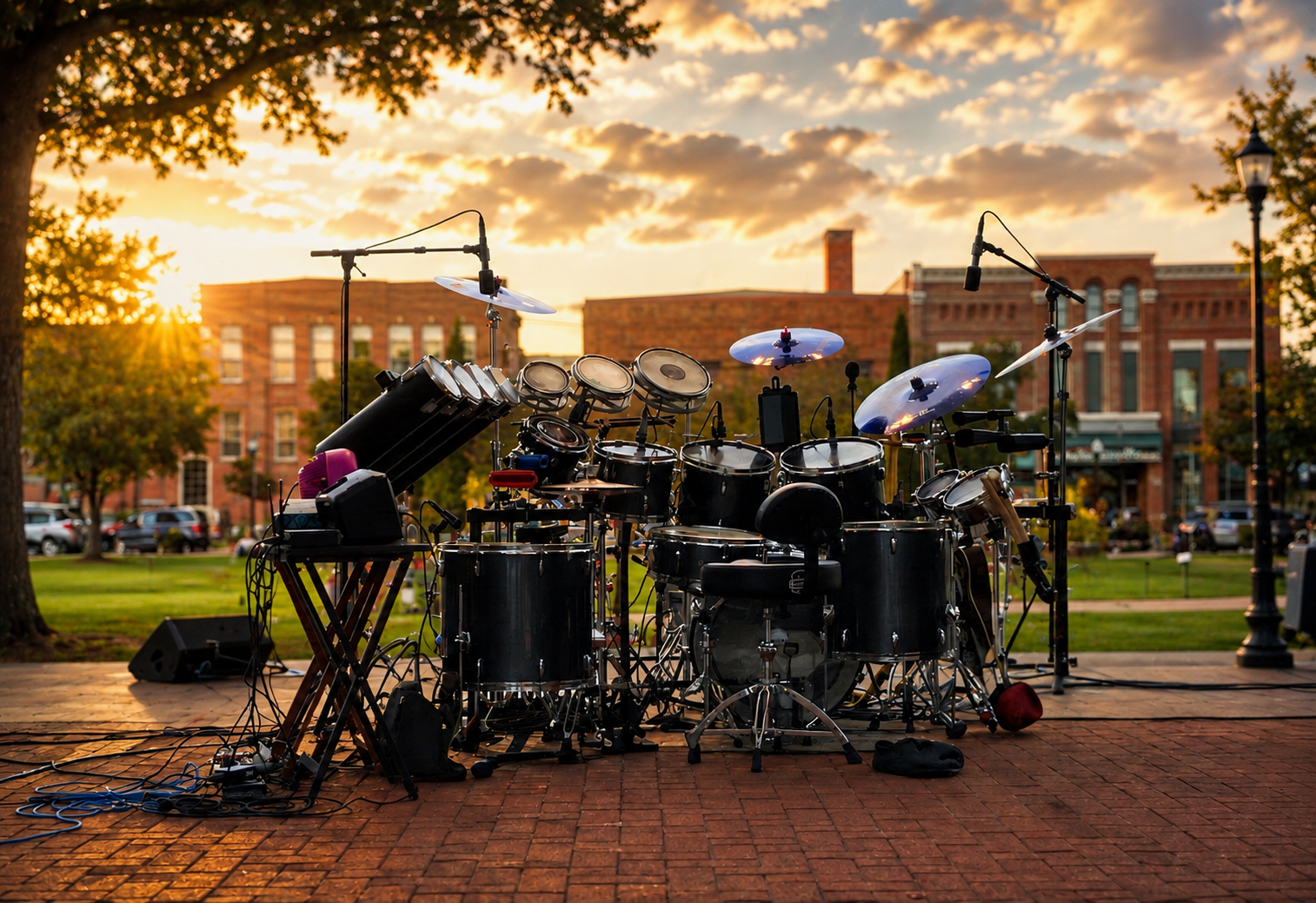
When I was young, my ears were alive, and I heard everything. I counted on one hand the times anyone ever said anything important to me and stepped as drummers' step, with attitude. I crossed every boundary and nobody ever bothered me.

At 17, when Colt 4 broke up, I immediately joined a second band. We were disorganized and unpopular, but our singer had a teenage superpower – access to his grandmother’s remote cabin in the woods – and after high school basketball games, our classmates drove into the country and trudged through the snowy woods to the waiting party cabin.
We grabbed beers from cases half-buried in the snow and stepped inside a small cabin. As the cabin warmed and ice melted from our boots and beers, my band played loud while our classmates danced in stocking hats and sweaters.
Pounding drums, I heated up and removed layers down to my T-shirt. Steam rose from my sweaty back, but I kept an eye on my Buckhorn Beer, perched on top of the wood-burning stove; the golden liquid thawed and bubbled up from the brown bottle and then dripped down the side of the glowing, red-hot stove. The loud hiiiisssssss of steaming beer meant the party was on.
And when the cabin started rocking on its pine log foundations, I worried that we’d tip it over and slide downhill like a wayward toboggan into the river. I imagined the headline on the front page of Saturday morning’s Eau Claire Leader-Telegram, “20 Menomonie High School Seniors Drown in the Red Cedar River.”
At 17, I was a living volcano and existed to smash cymbals and snare. The loud retorts distracted me from self-recrimination and unhappiness.
Everything was a drum, including my brothers, and I hit all of it with force. Secretly, I prepped to burn down my house or any house but I didn’t have a match. I did have a conscience though, and it kept me from turning everything into lava. I was, in the words of a James Taylor song, “a churning urn of burning funk.”
I was lucky to have a band even though we were musical and intellectual hacks. I couldn’t read a paradiddle-diddle on the chart, or decipher James Joyce, but in time, I learned to do both.
The band was salvation in a way. It gave me voice and a way to say f***ya to my family and the world for being weak, for being drunk, for being stupid, for being false, for ignoring me, and for lying about everything.
Drummning was a good way to punish my parents, and at 14 bought my first drum set. After dinner, as they read the Dunn County News on the couch above me, I went to the basement and pounded the drums, taking pleasure in rocking their socks off. When I took a break and came upstairs, walking past them on the couch, they peered over their newspaper with tight mouths and dark eyes, unsure of what I was, who I was, and how I got there. I saw regret in their twisted eyebrows.
My language was formed by skins and sticks; it was elemental and round, and its syllables were formed by bruising and punching. My dominant expression was born in the basement where I clawed like a badger for meaning and made contact with something from afar.
As a young drummer, I crushed a 4/4 backbeat and fed off the aggressive adrenaline rush to my reptilian brain and teenage testosterone. The energy drove me while the drum seduced me with its language of ceremony, ritual, and symbol-making.
Sexy rock and roll lured me into the music world with a drum text that was raw and tribal, its message delivered in long hair, loud music, and rebellion, I feasted on it and battled my parents over my hair and choice of friends. I had one foot on the gas and one foot on the brake, and while it took years to fathom, I learned subtle is better than smash-mouth and I came to understand the beauty of nuance.
Walt Whitman understood the power of drums to rend both the generations and the heavens: “Mind not the old man beseeching the young man, / Let not the child’s voice be heard, nor the mother’s entreaties, / Make even the trestles to shake the dead where they lie awaiting the hearses, / So strong you thump O terrible drums – so loud you bugles blow.”
I read Whitman and the rock sub-text. They both spoke in beards, in decibels, sandals, tie-dye, and beads.
In drummers, I saw shamans and addicts, living symbols of transformation and danger. The clanging of cymbals carried rock’s message that thrived on the razor’s edge of rebellion – the mother’s entreaties, and the child’s voices, went unheard.
Drummers walked on cloven feet; their beards were wild and so were they. Some drank themselves to death before I turned 18, and I learned early-on, my heroes were not superheroes.
But I was willing to smash the edge of a snare drum, a rim shot to sing-out the sharp edges of rock and roll because I saw an energy that matched mine. My parents won the hair battle but I won the war and kept thumping my terrible drums.
The rock drummer’s shadow did not capture me; I was a rock drummer, yes, and my motto was rebellion, but somehow, I had perspective and kept my head. Nobody knew this about me. And nobody trusted me either. Knowing how I was, I can’t blame them.
The Drums of Menomonie High School
From my desk I watched teachers move their lips, but I only heard rhythm. Every 50 minutes the school bell signaled another move, and in a noisy hallway, I dutifully joined the chorus line of the unaware and shuffled on to another square room and its necessary suffocation. I glared at my teachers. They ignored me.
At lunch, in the school cafeteria, I pounded tables with my knuckles until they swelled and turned blue. After school, I jumped in my Rambler and shifted three on the tree while tapping out rhythms to songs far and wide. My dashboard, steering wheel, and school cafeteria tabletop were vehicles to cross boundaries, to get away, and I followed my knuckles to get there.
I never took a lesson, but became a drummer by listening to records and mimicking what great rock drummers did. I followed their patterns on the snare, their and ride tom tendencies, their quick stick strikes on the high hat, and the ever-important kick bass. I tested plastic and wood-tipped drumsticks, striking the cymbals in a variety of target areas hoping to get the sound I was seeking. I slashed wire brushes across the snare’s drum head, hoping to get a bristly liquid sound that jazz drummers use.
I listened to Cream’s Ginger Baker, Mitch Mitchum of The Jimmi Hendrix Experience, The Who’s Keith Moon, and Grand Funk Railroad’s Don Brewer. These bands and drummers became legends – perhaps only in my mind – but they taught me the underlying message delivered by rock and roll.
I learned that drumming teaches cooperation, and playing music with others offers a lesson if one listens. A drummer at heart, I listen, and in this listening, yearn to learn.
One hundred years before I was born, Thoreau said, “If a man does not keep pace with his companions, perhaps it is because he hears a different drummer. Let him step to the music which he hears, however, measured or far away.”
I thought this was good advice for carving out my place in the world and thought that’s what I was about when I beat up my Ludwigs. I was listening, but to me, the frosting on the cake was hitting and pounding my way into rock’s powerful uncivilizing reverberation.
this excerpt is from a larger work, Stories Emerge Like Bears, Gregory Ormson’s lyric memoir, forthcoming January 2028 from Cornerstone Presss
Whitman, W., Karbiener, K & Stade, G (2004) Leaves of Grass First and “Death-Bed” Editions: additional poems. New York: Barnes and Noble Books. Beat! Drums! Beat! p 434
What did you notice here? I welcome your thoughts.