BLUE AND BROKEN IN THE KEWEENAW
Thorburn and I got scolded by a grade school principal in Michigan’s Copper Country. But come on, we were, and are writers. Back then, we were hungry and broke too.
Russell Thorburn, Upper Michigan’s first Poet Laureate, had been hired to travel through Michigan’s Upper Peninsula schools to lead poetry and writing workshops.
Thorburn believed children could write real poems if someone sparked an idea and expected enough of them. I brought my guitar and traveled with him to Michigan’s Copper Country in the far, far Northwest.
The idea was simple: students wrote poems, often their first, and afterward we fitted their words to familiar melodies and sang those poems back to them.
By the end of the residency, the poems were projected onto a big screen in the school auditorium where the children saw and heard their own words filling the room. It felt less like a performance than a celebration of voices that had discovered themselves.
Thorburn had been given vouchers for free pizza at a local pizzeria to use as motivation for the kids.
But when two days of workshops ended, and before the last morning, he still had a couple of vouchers in his pocket.
Every child had eaten. They were no longer hungry; we were.
“Who would know?” I asked Thorburn.
So we walked to the pizzeria and redeemed them . . . for us.
But someone recognized us and told the principal.
On the final morning, the Principal called Thorburn into his office. He wasn’t angry, really, only disappointed.
For years, that was the whole story I remembered. Now I remember something else.
Those schools were scattered through little mining towns like Dollar Bay, Lake Linden, Laurium, and Calumet, places that knew hard winters and even harder economics.
There was a time when the Keweenaw copper district rivaled Chicago in economic importance. Ships crowded the ports when fortunes came out of the ground.
And the mining companies built grand homes, schools, libraries, and opera houses. Men came from Cornwall, Finland, Italy, Croatia, and dozens of other places to dig copper from the earth.
Then the copper gave out.
The mines closed.
The people got hungry, but mountainous piles of snow kept coming.
Those who remained learned to live with winters, memory, and loss while settling into old houses, old trucks, and long mornings. A quiet endurance bult strong families over the dedades. Perhaps that is why those children’s poems have stayed with me. They were writing the lives they knew.
Thorburn’s workshops encouraged them to take risks, to forget what poems were supposed to sound like and simply tell the truth as only they could tell it.
One afternoon he asked them to write about the color blue.
Many of us would have written about the sky or Lake Superior or maybe even blues music.
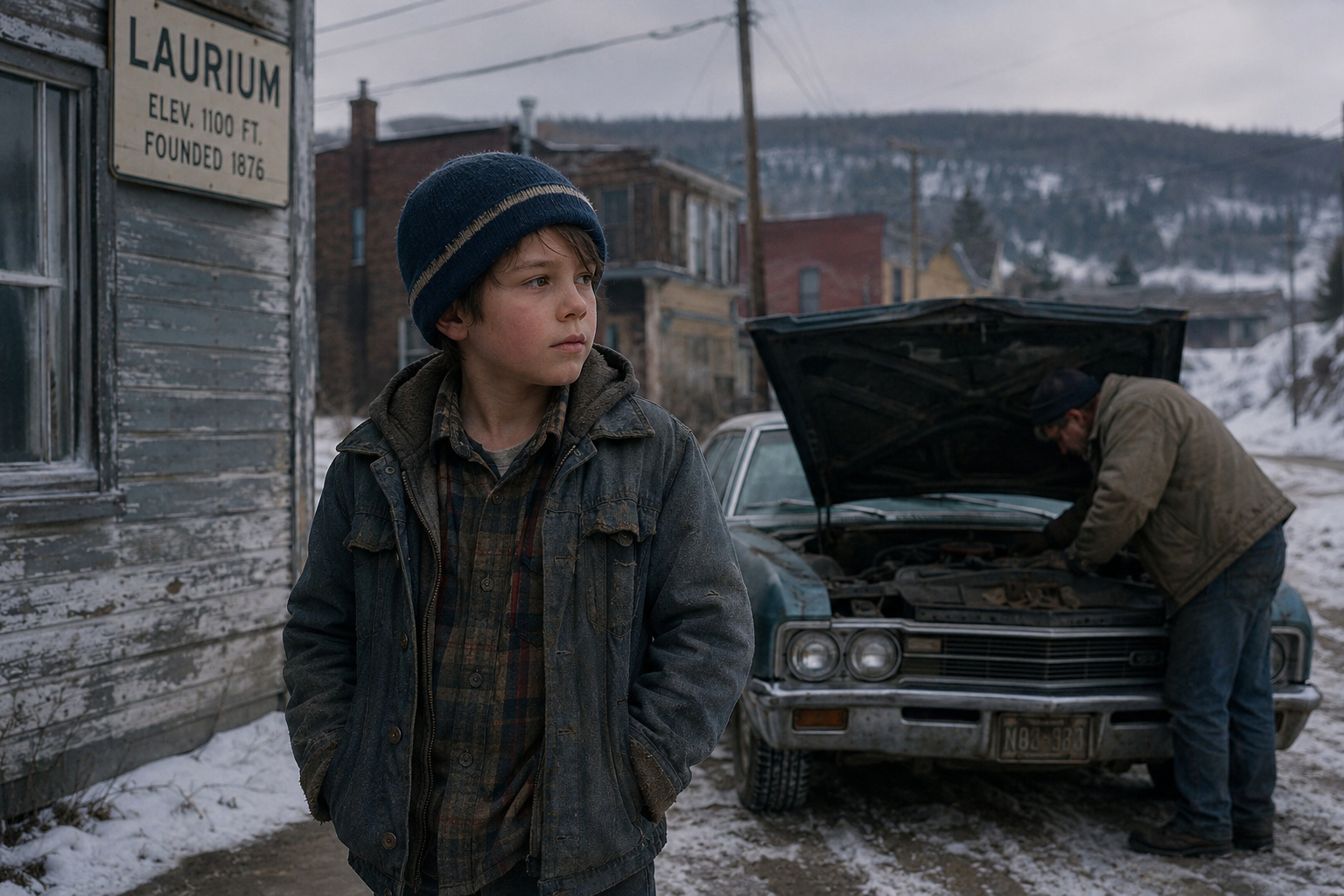
But one small boy, dressed in well-worn clothes, looked down at his paper for a while before writing.
Then he put down a sentence I have carried ever since.
“Blue is the color of my dad’s voice in the morning when the car won’t start.”
I have forgotten what the principal said about two adults using the pizza vouchers, but I have never forgotten that little boy or the blue morning he set before me.

What did you notice here? I welcome your thoughts.